Dallin Thornton · Utah State pole vaulter
One phone. One afternoon. 21 clips became a measured archive of 19 valid jumps—and one priority Dallin could take back to the runway.
The jump that set the ceiling
One attempt.
Five connected phases.
Jump 1326 is not an idealized model. It is the real attempt that proves the capability was already there.
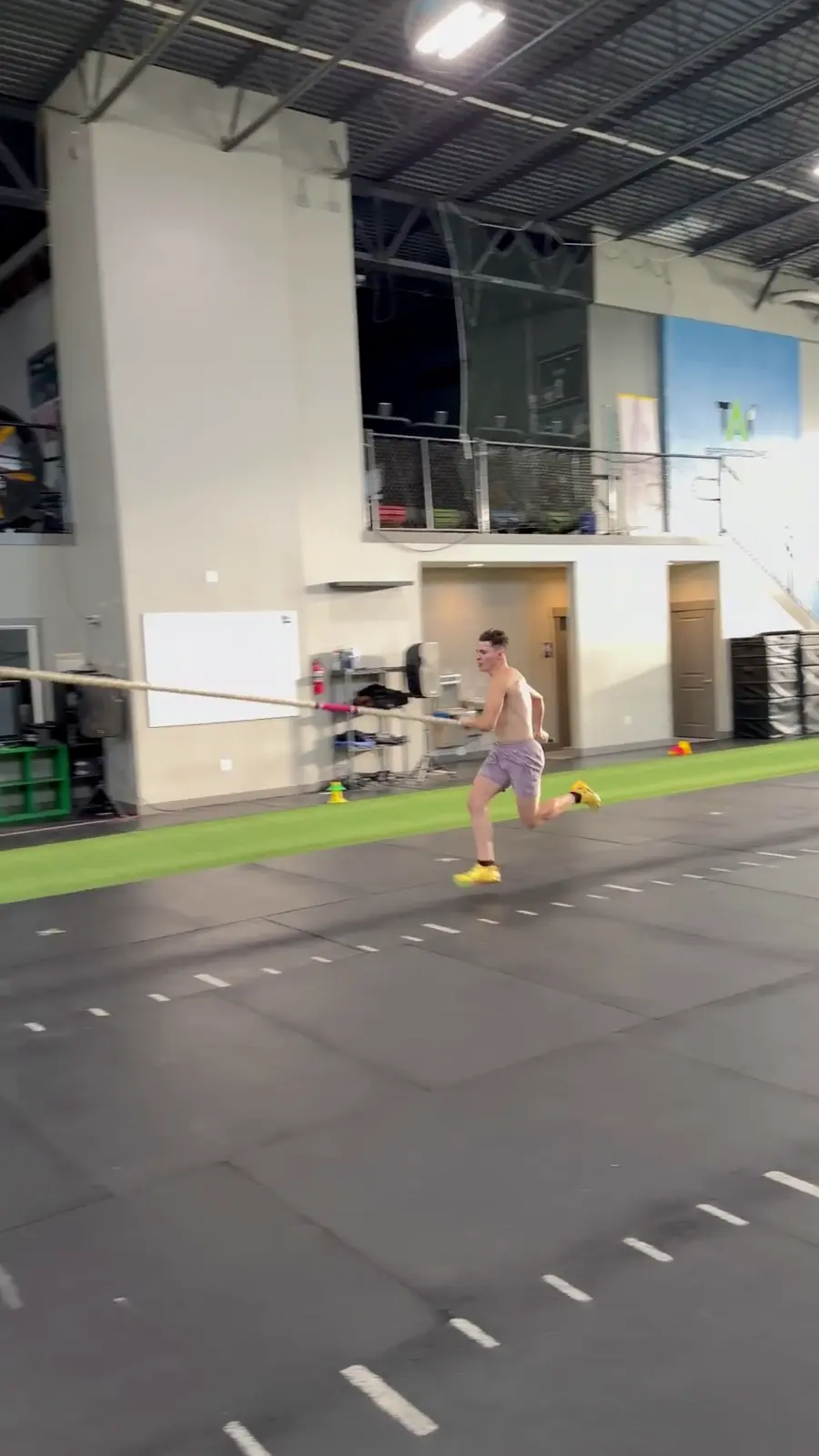 01
Approach
27.4FT/S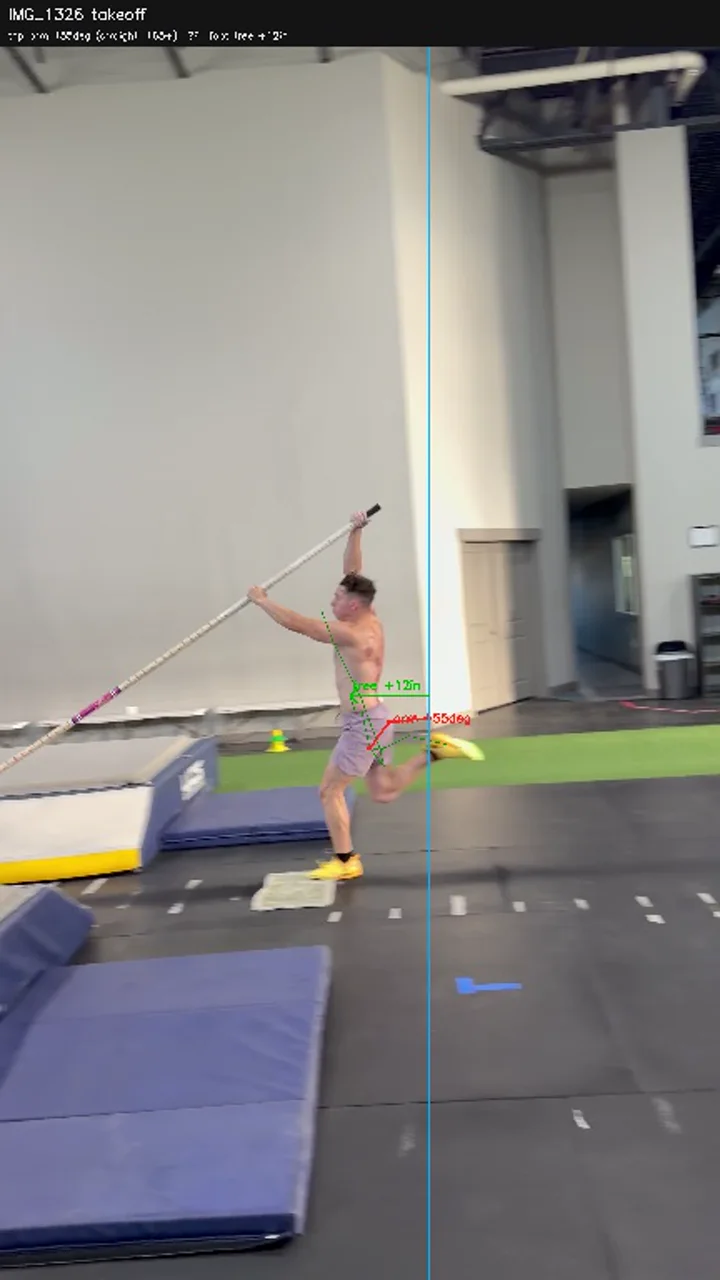 02
Plant
155°TOP ARM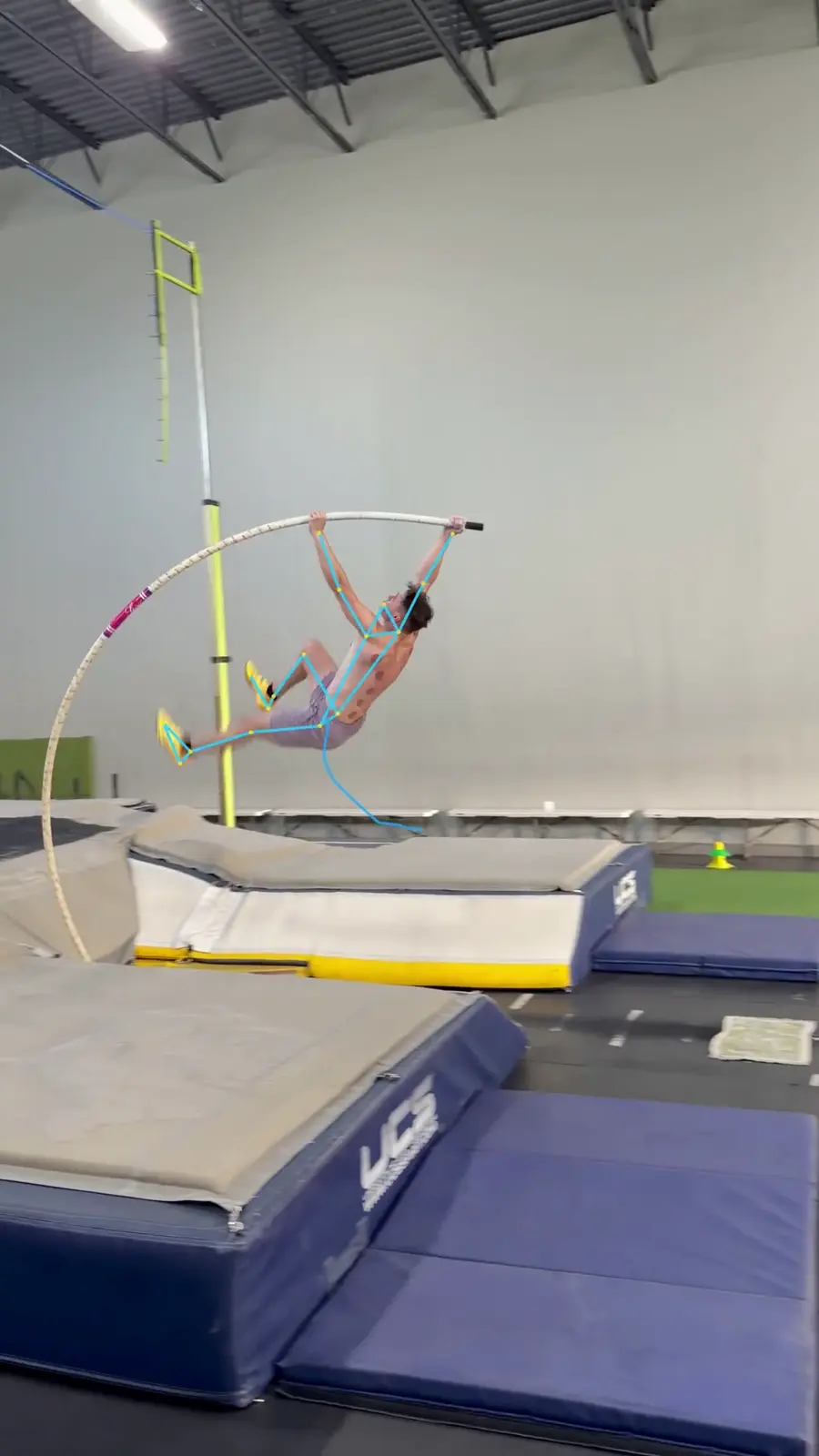 03
Takeoff
20°ANGLE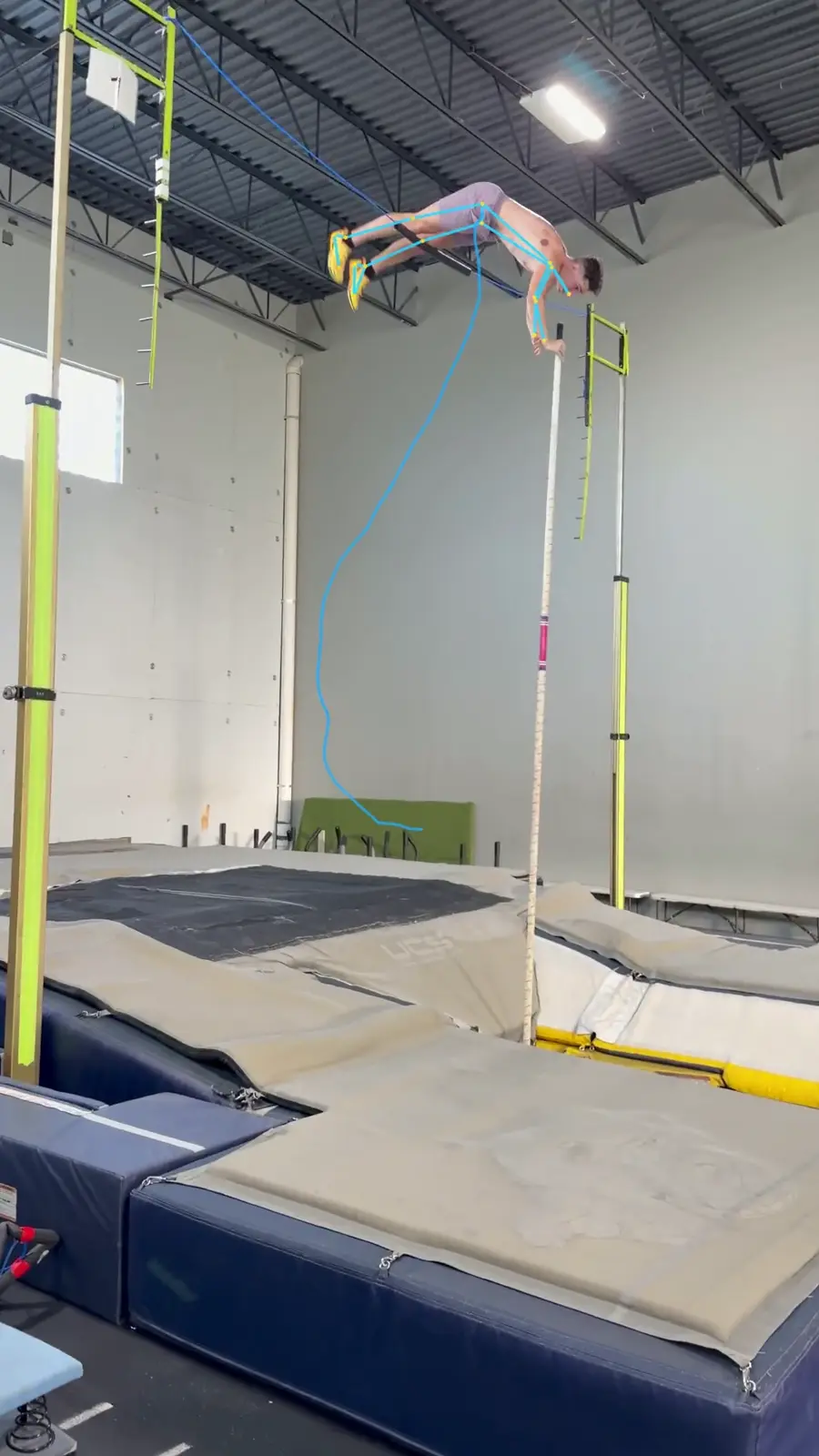 04
Inversion
169°ROCK-BACK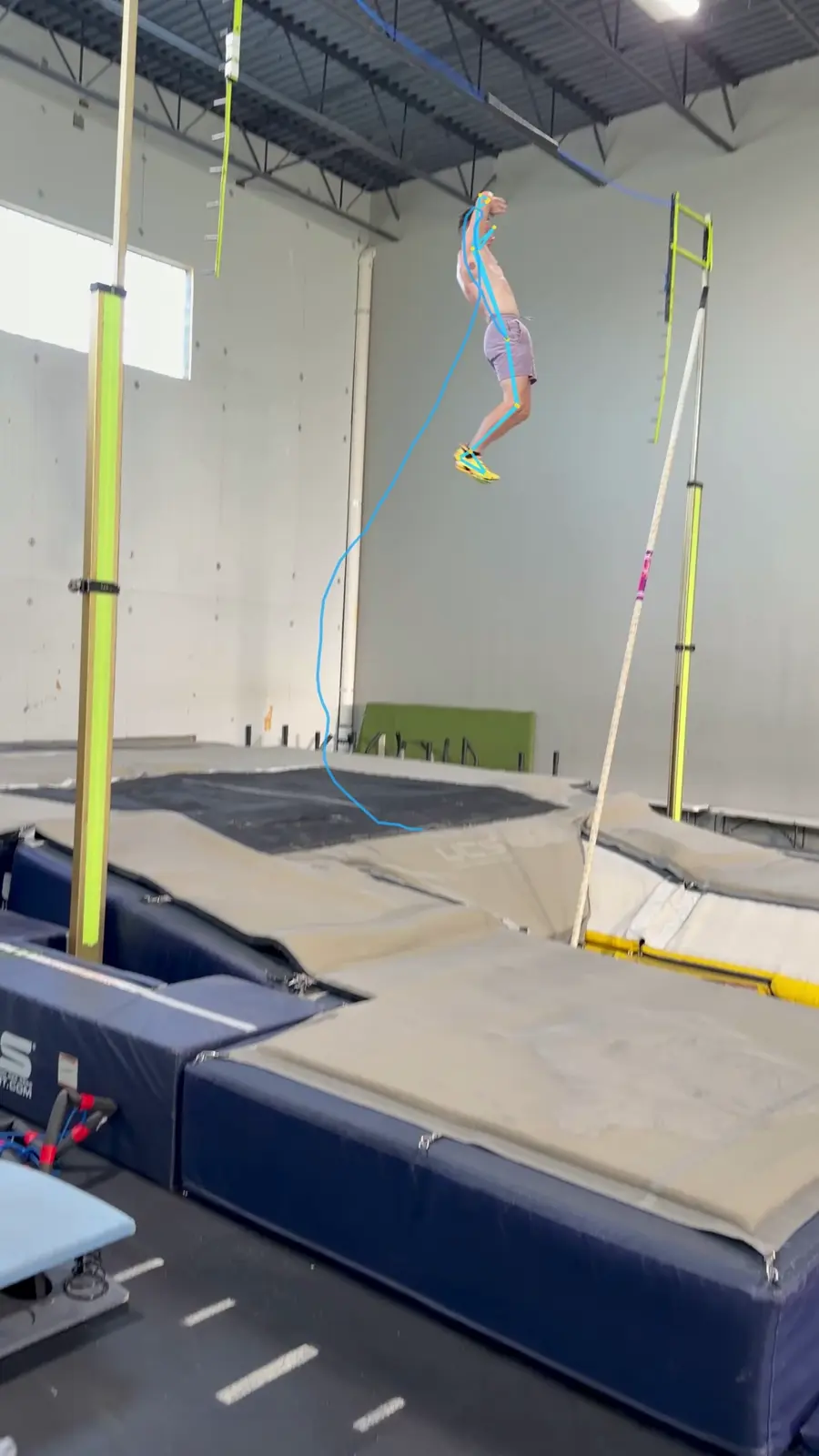 05
Push
+8′3″ABOVE GRIP
The whole afternoon
The best jump
wasn’t the pattern.
Every column below is one measured attempt. Eight finished near 170°. Eleven stalled near 57°.
Same athlete.
Same session.
Two different outcomes.
Every column is a real jump. Hover or focus to read the measured inversion.
169° · FINISHEDThe finding hidden inside the distribution
Capability wasn’t missing.
Repeatability was.
Grip and top-arm extension stayed locked in. Inversion moved fifteen times more. Training the fundamentals harder would protect the wrong thing; the archive makes the actual leak visible.
VaultLab ranked prescription
Finish the
rock-back.
On 11 of 19 attempts, the torso stalled near 57° instead of reaching roughly 170°.
- 02Move the takeoff out.
4 jumps landed about 5 inches under the top hand.
- 03Post the top arm.
159° median at plant against a 165°+ target.
- 04Drive flatter.
Takeoff ranged 14–33°; the higher jumps drove flatter.
- 05Carry more speed.
Approach ranged 21–28 ft/s; the fastest runs reached the highest apex.
From report to athlete model
The archive becomes
the advantage.
One jump describes an attempt. The measured archive learns what is normal for the athlete, what is drifting and which successful attempts contain the better answer.
- 01Measured attemptMEASURE
Five phases, source frames, confidence and one ranked finding.
- 12Personal baselineBASELINE
Normal ranges and repeatability unlock across at least two sessions.
- 30Adaptive archiveADAPT
Matched successes, drift and a confidence-backed next experiment.
Adaptive uses Dallin’s archive to illustrate the evidence contract. Personal baselines unlock after 12 valid jumps across two sessions; deeper athlete learning begins around 30 context-rich attempts.
Your next PR leaves evidence
Stop guessing
which part moved.
Upload one side-on jump. See the frame, measurement and reasoning free.