Angle
Top-arm extension
High
Both tracked endpoints are usually visible; scale does not affect the angle.
Accuracy · the evidence contract
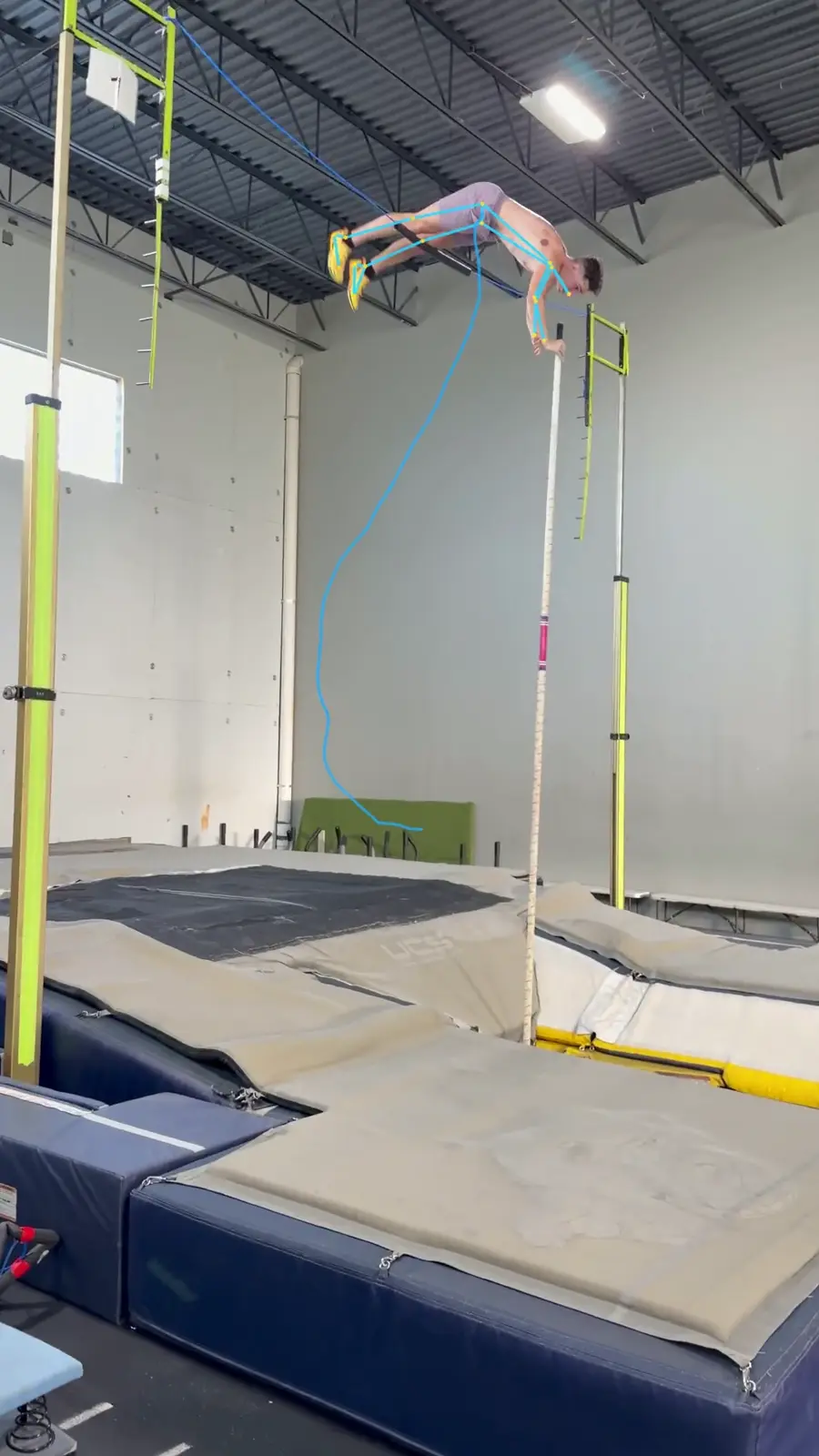
VaultLab produces pose-derived angles and calibrated distance estimates from one side-on video. It is built for repeatable coaching evidence—not laboratory certainty from a phone.
01 · Real-world scale
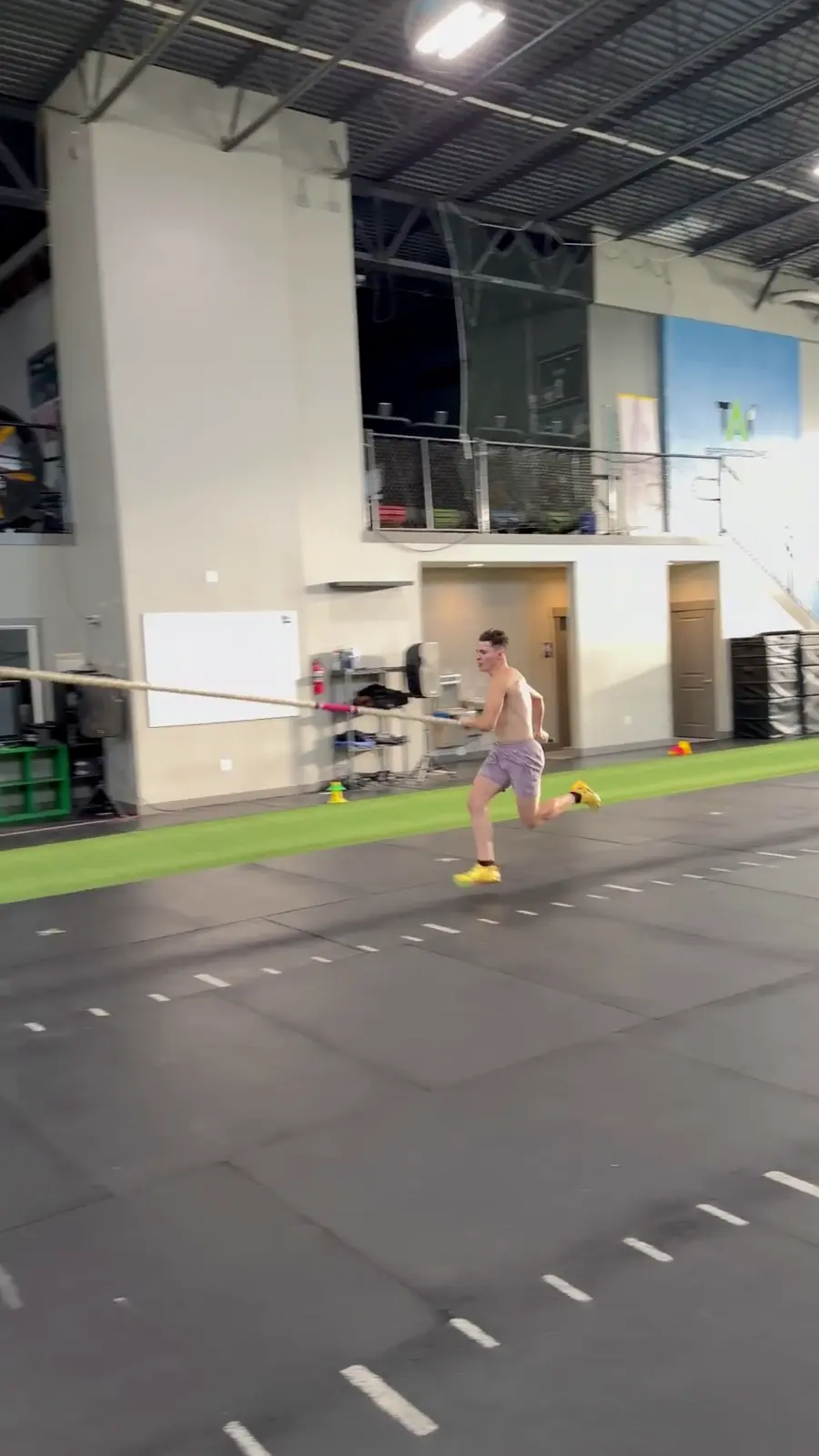
Dallin’s standing height and the crossbar create vertical scale. The recorded run provides context. Perspective still matters, so confidence follows the geometry.
02 · Metric confidence
Each report should tell the coach whether to trust the exact value, the direction of change, or only the phase-level pattern.
Both tracked endpoints are usually visible; scale does not affect the angle.
A second pose model agreed within about 10–11° on average across eight checked jumps.
Geometric, but the plant and pole occlude joints at the exact takeoff frame.
Tracked separately from pose; busy backgrounds can weaken the pole line.
Frame timing is exact; real-world displacement depends on camera perspective.
Vertical measurements sit near the known crossbar reference.
Horizontal depth carries more perspective error than vertical height.
Trust direction and session change more than the exact inch count.
03 · Independent model check
Eight jumps were also run through RTMPose. The two systems agreed on the coaching classification—finished or stalled—on every checked jump. Their inversion angles differed by roughly 10–11° on average.
Agreement between two models is not ground truth. It reduces the risk of a single-model hallucination; it does not replace physical validation.
04 · Physical validation
A ground-truth study will compare taped takeoff position, measured grip, recorded bar height and video-only output jump by jump. Until that study is complete, VaultLab publishes qualitative confidence—not invented percentages or sub-degree claims.
What stays human
Get started
One complete measured jump is free. No card required.